The best time to visit Milford Sound
Start with the rain, because everyone gets this backwards
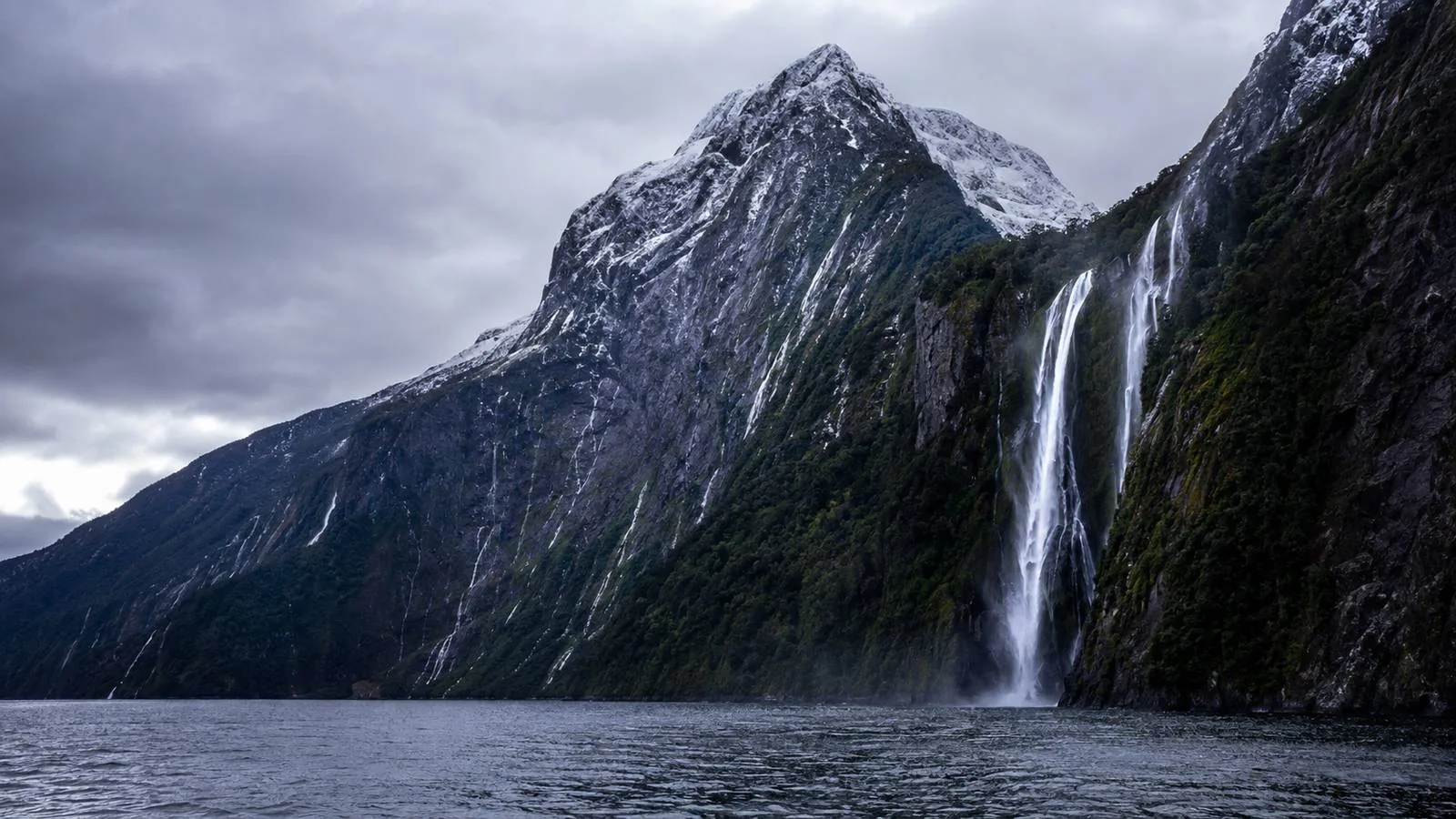
Milford Sound has 6,412 mm of rain a year, about 252 inches, spread over roughly 182 rain days. It is the wettest inhabited place in New Zealand and it can take 250 mm in a single day. Two waterfalls run permanently: Lady Bowen at 162 m and Stirling at 151 m. Every other waterfall you have seen in a photograph of this fiord, the hundreds of white threads down a black wall, only exists while it is raining or in the hours after.
So a visitor who moves a booking to dodge a wet forecast is optimising for the wrong thing. The cliffs are still there in the rain, the boat still has an indoor saloon, and the fiord is at its most extreme on the day you would have cancelled. What you lose on a wet day is the top of Mitre Peak. What you gain is everything below it.
Season by season
| Season | Temperature | Crowds | What is happening | Road risk |
|---|---|---|---|---|
| Summer, Dec–Feb | 18–25°C | Heaviest of the year | Longest days, dolphins and seals most active, fullest boats | Low |
| Autumn, Mar–May | 10–20°C | Noticeably thinner | Tawaki start returning around April, settled light | Low, rising from May |
| Winter, Jun–Aug | 5–10°C | Quietest of the year | Snow on Mitre Peak, waterfalls at their most powerful on rain plus snowmelt | Highest |
| Spring, Sep–Nov | 10–18°C | Building through November | Seal pups, penguin chicks, calves with the dolphins, lupins on the road in October | Falling |
The case for the shoulder months
October and November are my pick. The Milford Road is lined with lupins through October, the penguin chicks are visible, the dolphins have calves with them, and the coaches have not yet reached their summer volume. March and April do the same job from the other side: the water is still warm enough for the wildlife to be busy, the crowd thins the moment the school holidays end, and the tawaki begin coming back. In both windows you can usually still choose your departure hour, which matters more than most people expect. That decision has its own page: morning or afternoon.
Winter, honestly
June to August gives you the emptiest boats and the strongest waterfalls, and it is also the only season where the road can take the day away from you. Winter runs May to September here. Snow and ice are normal, chains may be required and can be hired in Te Anau, and the road closes for avalanche control at short notice. If your trip has exactly one free day and that day is in July, either build a spare day around it or start from Te Anau, 120 km out instead of 291. The reasoning is in tours from Te Anau and how to get there.
The month matters less than the hour on the day. The terminal is busiest between about 11am and 1pm in every season, because that is when the Queenstown coaches land together. A February boat at 3pm is quieter than a September boat at noon.
Book a cruise for your dates
Summer morning departures go first, and free cancellation to 24 hours applies on most cruises, so holding a slot early costs nothing but the click.
Frequently asked questions
What is the best month to visit Milford Sound?
October, for lupins along the road, penguin chicks, dolphin calves and a terminal that has not yet filled up. April is the close second from the other end of the season. January has the longest days and the biggest crowds.
Is Milford Sound worth visiting in the rain?
Yes, and arguably it is better. Only Lady Bowen and Stirling Falls run all year; the hundreds of others appear while it is raining and fade afterwards. There are about 182 rain days a year, so dodging them is not a plan. More on the day itself in what to expect on board.
Can you cruise Milford Sound in winter?
Yes. Boats run year-round, the fiord is quietest between June and August and the waterfalls are at their most powerful. The risk sits on the road, not the water: snow, ice, chains and avalanche closures at short notice between May and September.
What is the weather like at Milford Sound in summer?
Between 18 and 25°C, with the longest daylight of the year and the most active dolphins and seals. It still rains. Pack for both, as set out in what to wear on a Milford Sound cruise.