What to expect on a Milford Sound cruise
Before you board
Cruises leave from the Milford Sound Visitor Terminal and check-in opens about 20 minutes ahead. The walk from the car park to the terminal is where you meet the sandflies. Te namu was released by Hine-nui-te-pō so that people would not be tempted to stay forever, and the story holds up: they are relentless on shore, worst standing still at the terminal, and essentially gone the moment the boat is moving. Repellent, then forget about them.
The boat itself
Every operator gives you an indoor saloon and outdoor deck space, and you will spend the trip moving between the two. The modern catamaran has large windows plus HD cameras projecting the outside view onto indoor screens, which is the most comfortable option if standing in weather is not for you. The small boat carries the fewest passengers of the Milford operators and stops often at scenic points, with tea, coffee and hot chocolate included. Commentary is live from the skipper on both.
Down the fiord, in order
- Lady Bowen Falls, 162 m. Close to the terminal and running in any weather. One of only two permanent waterfalls here.
- Mitre Peak, 1,692 m. The tallest thing you see from the deck. On a low-cloud day you get the bottom two-thirds and the top stays hidden.
- Seal Point. New Zealand fur seals lie on the rocks year-round. Pups appear in spring.
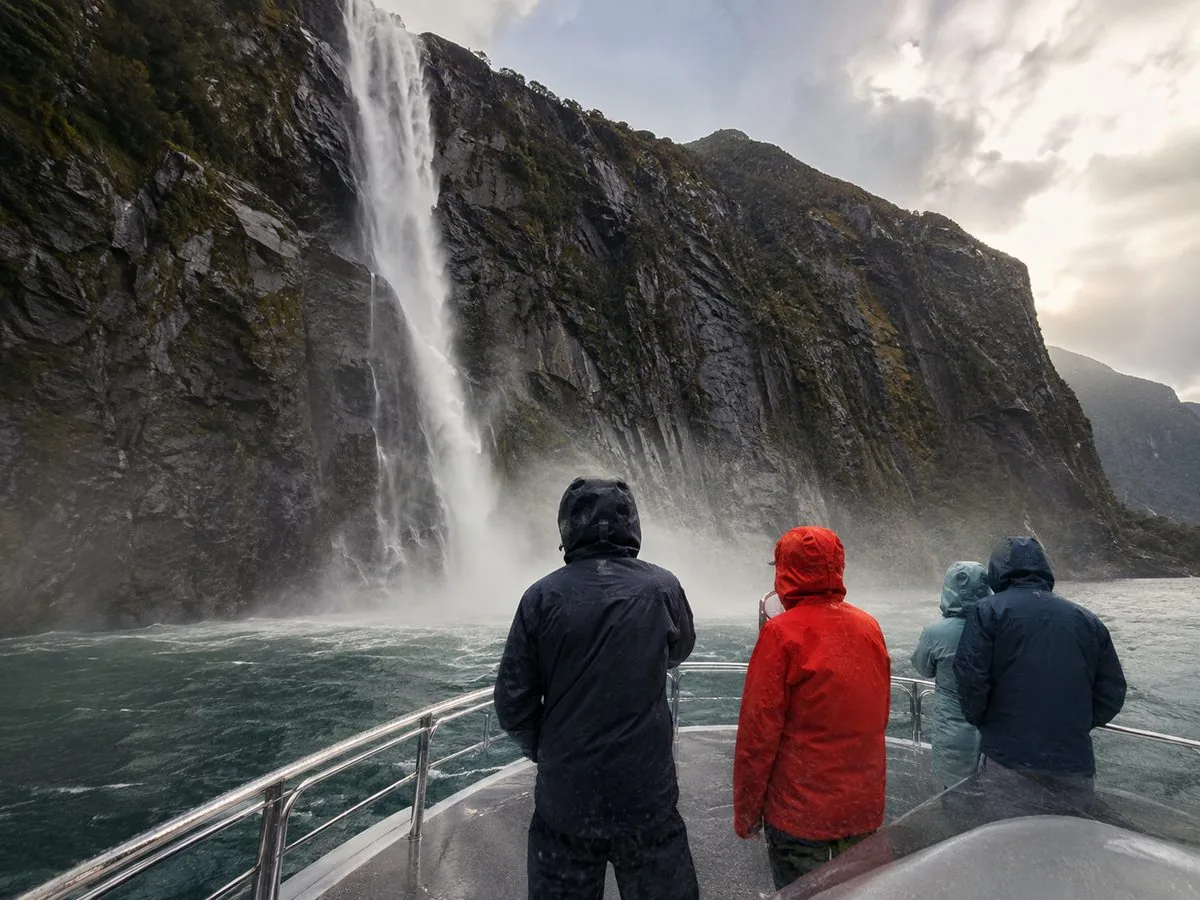
- Stirling Falls, 151 m. The cove in front is deep and the cliff is sheer, so boats can put their bow almost under it. This is the wet part and it is deliberate.
- The mouth. Where the fiord meets the Tasman Sea, 15 km from the terminal. Most cruises go just far enough out to look back at the entrance, a leg of under about 30 minutes, and it is the only stretch where the water moves at all.
You will get wet, and that is the point
If you stand at the bow while the boat noses into Stirling Falls, you get soaked. It is spray, not weather, and the saloon is ten steps away with a warm drink in it. A waterproof shell and a plan for your camera is the whole preparation: see what to wear on a Milford Sound cruise.
Wildlife odds
Fur seals are close to a certainty and the rest is luck. These are the world’s southernmost resident bottlenose dolphins, with calves in spring. Fiordland crested penguins, tawaki, start returning about April, breed through winter and have chicks visible in spring. Humpback and southern right whales turn up occasionally. Under you, black coral colonies grow from about 10 m depth, which is unusually shallow: a freshwater layer sits on top of the seawater and cuts out the light.
What the commentary covers
The good skippers cover why this is a fiord rather than a sound, since it was carved by ice and not drowned by a river, and the 19th-century surveyors are why the wrong word stuck. You will hear the name Piopiotahi and the piopio, a native thrush now extinct, one of which flew south to mourn Māui. Tū-te-Raki-Whanoa cut these fiords with his adze Te Hamo, working north and getting better at it. John Grono named it Milford Haven in 1823 after the Welsh one, Captain John Lort Stokes later changed it to Milford Sound, and Rudyard Kipling called it the eighth Wonder of the World, which was his opinion rather than a designation anyone conferred. Tangiwai pounamu was gathered at Anita Bay near the mouth and carried out along the Milford Track.
Children, mobility and comfort
Most cruises take children happily. Two things to check before booking: the Te Anau coach trip is not suitable for children under five, and the premium Queenstown coach does not supply child restraints, so you bring your own. The small-group tour has child safety seats and an infant picnic lunch for ages 0 to 3, but does not carry non-folding or electric wheelchairs. If motion is your worry, the answer is in will I get seasick, and the timings are in how long the cruise takes.
Stand outside for the run down the fiord and again at Stirling Falls, and take the saloon for the leg back. The wind on the return is colder than the outbound run and most of the good sightlines have already happened.
Book the cruise
The Queenstown coach and cruise pairs the drive with a two-hour nature cruise and is the version most people book. Choosing your own hour instead is covered in morning or afternoon.
Frequently asked questions
What do you actually see on a Milford Sound cruise?
Lady Bowen Falls at 162 m, Mitre Peak at 1,692 m, fur seals on the rocks at Seal Point, Stirling Falls at 151 m with the bow pushed close in, and the mouth of the fiord where it opens to the Tasman Sea 15 km from the wharf.
Will I get wet on a Milford Sound cruise?
If you stand at the bow while the boat noses into Stirling Falls, yes, thoroughly. It is spray rather than rain and there is always an indoor saloon to retreat to. A waterproof shell handles it, as covered in what to wear.
Are Milford Sound cruises suitable for families?
Generally yes, with two exceptions worth checking: the Te Anau coach trip is not suitable for under-fives, and the premium Queenstown coach asks you to bring your own child restraints. The small-group tour carries child safety seats.
Are there sandflies at Milford Sound?
Yes, and they are worst on shore around the terminal and the car park. Once the boat is moving they are effectively absent. Repellent before you leave the car is enough.