Milford Sound cruises, explained
A Milford Sound cruise is a boat trip of 105 minutes to two hours along Piopiotahi, a 15-kilometre glacier-carved fiord in Fiordland National Park, past the 151-metre Stirling Falls and beneath rock walls that rise more than 1,200 metres. The boat is the short part. The decision that actually shapes your day is where you sail from — the Milford Sound Visitor Terminal, Te Anau 120 km away, or Queenstown 291 km away.
I live in Te Anau, two hours down the Milford Road, and the question I am asked most is which boat to book. It is the wrong question. Every operator runs the same 15 kilometres of water past the same waterfalls, and the boats are more alike than the marketing suggests. The decision that actually changes your day is where you leave from.
It is a fiord, not a sound
Piopiotahi was cut by a glacier, not drowned by a river, which makes it a fiord. The name stuck because the surveyors of the 1800s wrote “sound” and nobody corrected them. The sealer John Grono called it Milford Haven in 1823, after the harbour in Wales, and Captain John Lort Stokes renamed it later. In Māori tradition the fiords were carved by Tū-te-Raki-Whanoa with his adze Te Hamo; he started at Preservation Inlet and had most of the practice in by the time he reached this one, which is why it is the tidiest of them. Piopiotahi means one piopio, a native thrush now extinct, which flew south to mourn Māui.
The numbers do the rest of the work. Fifteen kilometres from the Tasman Sea inland. Rock walls over 1,200 metres on both sides. Mitre Peak at 1,692 metres, with The Elephant at 1,517 and The Lion at 1,302 along the same run. Between 550,000 and a million people a year come to look at it. Rudyard Kipling called it the eighth Wonder of the World, which is a quote rather than a designation.
Three departure points, and what each costs you in hours
From the Milford Sound Visitor Terminal, a cruise is a two-hour errand. You buy a cruise-only ticket at $98 or $100, check in twenty minutes before departure, and the rest of the day is yours. That assumes you have a car, and that you accept parking at NZD 10 per hour before 3pm.
From Te Anau, it is 120 kilometres and about two hours each way. A guided day at $162 buys the driving, the short walks, a packed picnic lunch and a small boat that runs out to the open sea. DOC says allow eight hours if you want the stops. Moving your base here the night before is the single most useful thing most visitors can do, and it is why tours from Te Anau keep the highest rating on this site.
From Queenstown, it is 291 kilometres and roughly four and a quarter hours without stopping, which nobody does. A coach day trip runs twelve hours door to door at $172, or twelve and a half on the premium coach at $163 with 69 pickup points. Around 105 minutes of that day are on the water. Without a car it is the sane option, and the driver commentary through the Eglinton Valley is half of what you are paying for, but you should know what you are paying for. The cost page lays the ladder out from $98 to $531.
Rain is the feature
Milford Sound gets 6,412 millimetres of rain a year, 252 inches, across roughly 182 rain days, and can take 250 millimetres in a single day. It is the wettest inhabited place in the country. Only two waterfalls here are permanent: Lady Bowen at 162 metres and Stirling at 151. Every other fall you have seen in a photograph exists because it was raining an hour earlier. Visitors who shift their booking to dodge a wet forecast are optimising for the wrong thing; they arrive to two waterfalls and a grey wall. Go in the rain, stand under the saloon roof when you want to, and read the month-by-month case before you reschedule anything.
The 11am to 1pm crush
Coaches leave Queenstown around 6:30am, 7:15am and 8:45am. They all arrive in the same two-hour window, so the car park and the terminal are at their worst between about 11am and 1pm, and the boats are fullest then. The first departure of the morning and anything from about 2pm onwards are noticeably quieter, and weekdays beat weekends. Boats run roughly 10am to 3pm. In January I take the 3pm; in July I take the 9am, because the light is gone by mid-afternoon. Morning or afternoon goes through the trade properly.
What you actually see
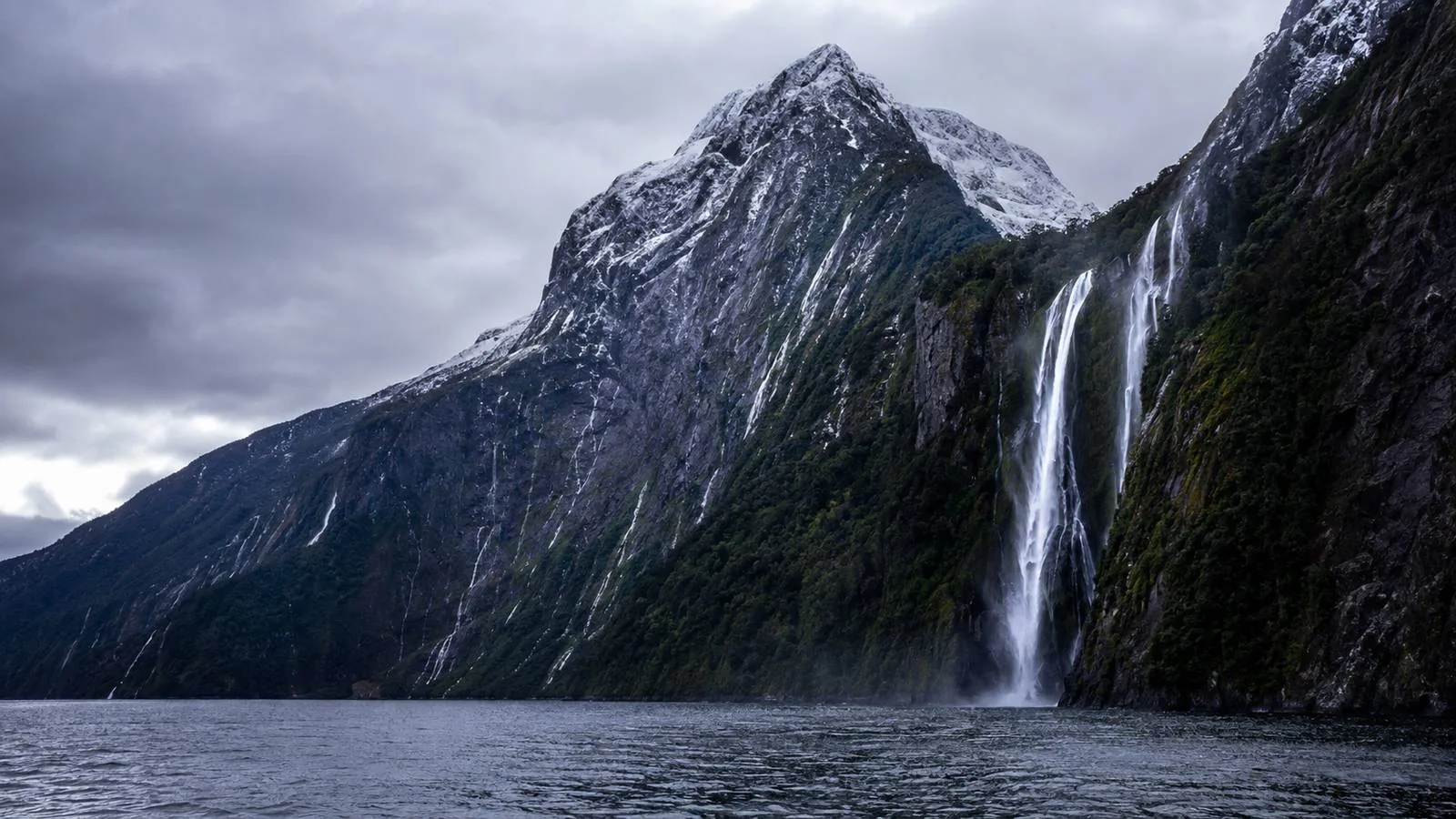
Out of the terminal, Bowen Falls comes up almost immediately. Mitre Peak sits on your left. The boat crosses to the seal rocks at Seal Point, where New Zealand fur seals lie about all year and bottlenose dolphins — the southernmost resident population in the world — turn up when they feel like it. Then Stirling Falls, where the skipper noses the bow in because the cove is deep and the cliff is sheer, and anyone on the foredeck gets soaked. Then the mouth, where the walls stop, the swell starts and you look back at the entrance. That leg is under thirty minutes, and it is the only part of the trip that moves. The return runs the other wall. What to expect on board covers the rest.
What the brochures leave out
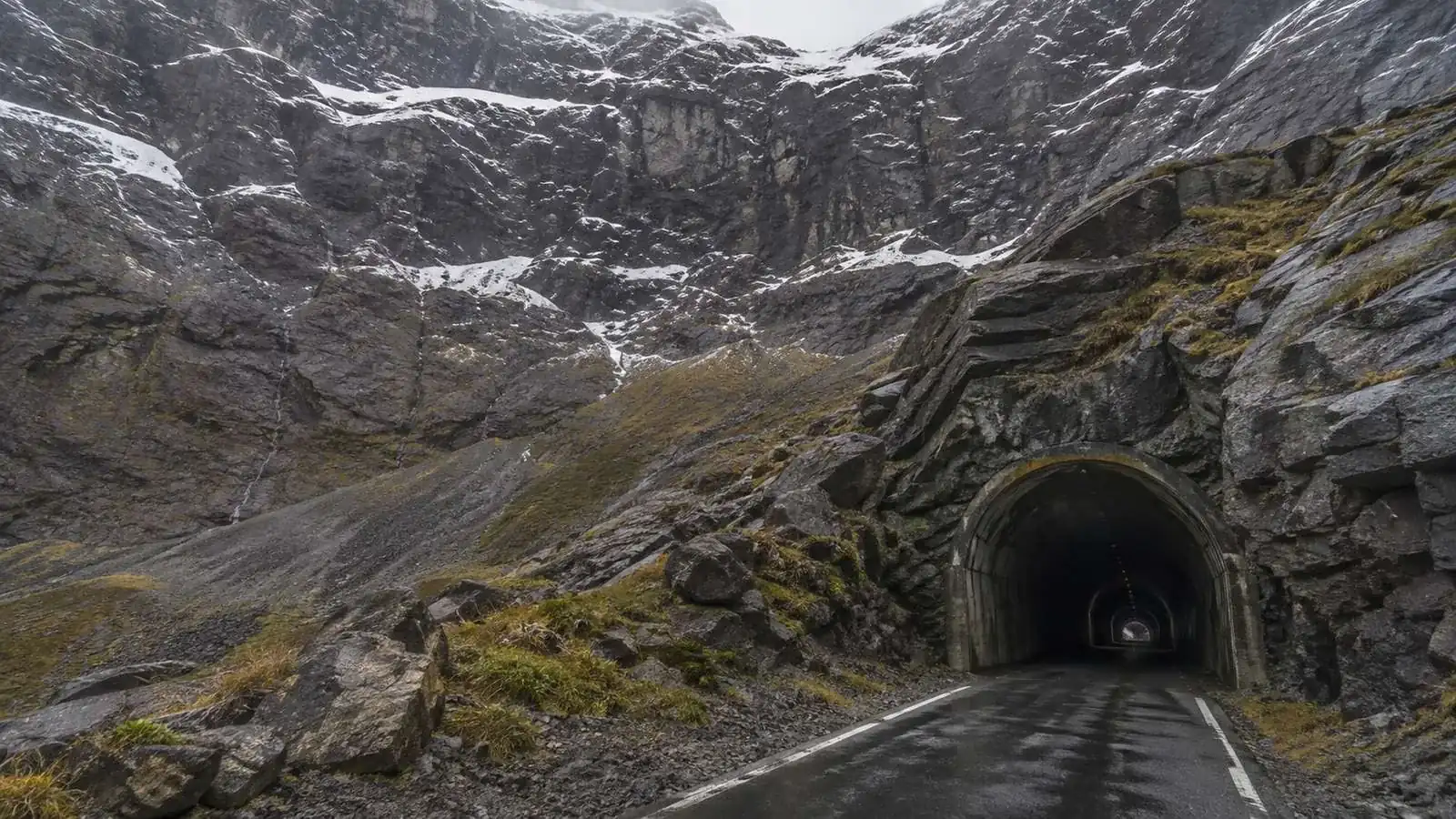
Three things. The Homer Tunnel is 1.2 kilometres of unlined rock running downhill towards Milford, and in peak summer the traffic lights can hold you for twenty minutes each way — build it into your timing. Sandflies, te namu, are real: worst on shore and at the terminal, essentially absent once the boat is moving. And there is no fuel between Te Anau and Milford Sound, none at all, with patchy to absent mobile coverage the whole way, so fill up and download your maps before you go. The stretch between the Hollyford Road junction and The Chasm is a Restricted No Stopping Zone because it is an avalanche path. Do not stop there for a photo. How to get there has the winter version, chains included.
Ready to book?
If you are coming from Queenstown and want the whole day handled, this is the coach and cruise I point most people at. If you have a car, start with cruise-only tickets instead, and if you can move your base for a night, read the Te Anau case first.
Can’t make these dates?
Browse more available Milford Sound cruise and find one that fits your schedule — all with instant confirmation and free cancellation.
Frequently asked questions
Is a Milford Sound cruise worth it if it rains?
It is better in the rain. There are only two permanent waterfalls in the fiord, Lady Bowen at 162 m and Stirling at 151 m. Every other cascade you see in photographs is a temporary one that runs while it is raining and for a while afterwards. With 6,412 mm of rain a year across roughly 182 rain days, a wet sailing is the normal sailing and the more spectacular one. More on this in when to visit and is it worth it.
Where should I depart from?
Whichever you are already near. From the Milford Sound Visitor Terminal a cruise is $98 and takes about two hours of your day. From Te Anau, 120 km away, a guided day with lunch and short walks is $162. From Queenstown, 291 km away, the same class of cruise inside a twelve-hour coach day is $172. Compare all three on the all-cruises page.
How long do I need at Milford Sound?
The boat is 105 minutes to two hours. The day around it is what varies: roughly two hours if you are staying at Milford, eight from Te Anau, and twelve to thirteen from Queenstown. See how long the cruise takes for the breakdown.